News
Julian Stieger's sustainable cuisine: a journey toward locally sourced ingredients
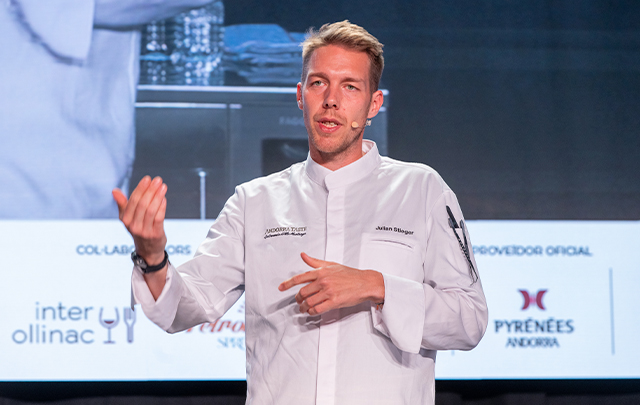
Julian Stieger, an Austrian chef at the helm of the Rote One Chef Table restaurant, discussed the importance of sustainable cuisine and respect for the rhythms of nature. Stieger, whose career has defied expectations, shared his experience in the culinary world, highlighting his focus on using local ingredients and preservation techniques to extend harvest seasons. During his presentation, Stieger recounted the story of a chef who, after spending time in New York, returned to Austria and faced a culture shock while adapting to a rural environment. He discussed the innovative “Chef’s Table” restaurant, which seeks to transform the cuisine of a traditional village by incorporating local products and a unique architectural design.
The chef also emphasized the issue of food waste in the kitchen, advocating for collaboration with small local producers. Stieger presented two vegetarian dishes that reflect his philosophy: one featuring local mushrooms and Jerusalem artichoke cream, and another with seasoned eggplant and zucchini sauce, both made with ingredients from the region. His presentation was not only a call to action but also an invitation to rethink the relationship between gastronomy and the environment. More on Julián Stieger’s Sustainable Cuisine: A Journey Toward Local Sourcing In a recent presentation by Julián Stieger, an Austrian chef at the helm of the Rote One Chef Table restaurant, he addressed the importance of sustainable cuisine and respect for the rhythms of nature. Stieger, whose career has defied expectations, shared his experience in gastronomy, highlighting his focus on using local ingredients and preservation techniques to extend production seasons.
During his talk, Stieger recounted the story of a chef who, after a stint in New York, returned to Austria and faced a culture shock while adapting to a rural environment. This story served as an example of the culinary transformation that can be achieved by returning to one’s roots and working with what the land provides. The innovative “Chef’s Table” restaurant was discussed; it aims to transform the cuisine of a traditional village by incorporating local products and a unique architectural design that respects the environment.
The chef also emphasized the issue of food waste in the kitchen, advocating for collaboration with small local producers. He highlighted that many ingredients are discarded for failing to meet aesthetic standards, representing a significant loss in the supply chain. Stieger proposed a more mindful approach, one that values the quality of products over their appearance.
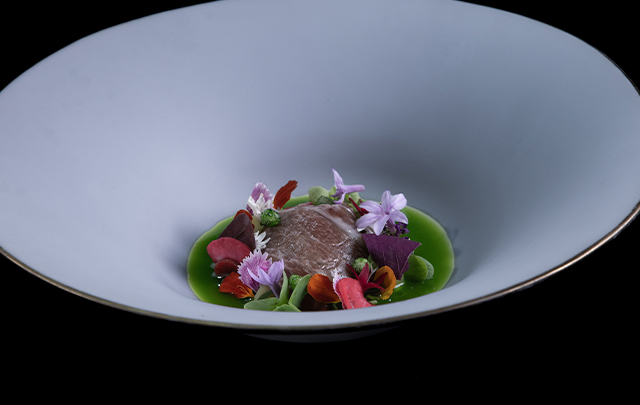
In his presentation, Stieger showcased two vegetarian dishes that reflect his culinary philosophy. The first, made with local mushrooms and Jerusalem artichoke cream, highlights the richness of the region’s ingredients. The second dish, featuring marinated eggplant and zucchini sauce, demonstrates how innovative techniques can be used to enhance the flavors of local produce.
In addition, Stieger shared his vision on the importance of building a community around cuisine, where chefs and producers work together to promote the quality of ingredients and sustainability. His presentation was not only a call to action but also an invitation to rethink the relationship between gastronomy and the environment, emphasizing that every choice made in the kitchen can have a significant impact on the world around us.
In conclusion, Julian Stieger’s presentation served as a reminder that cooking can be a vehicle for change, promoting sustainable practices and a greater respect for nature. His focus on local sourcing and collaboration with local producers offers a model for those seeking to innovate in the culinary field without losing sight of environmental responsibility.
Related news
News
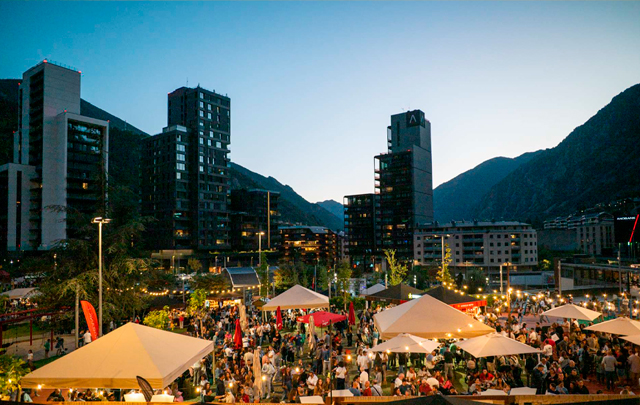
Andorra Taste breaks records with more than 70,000 drinks sold
News
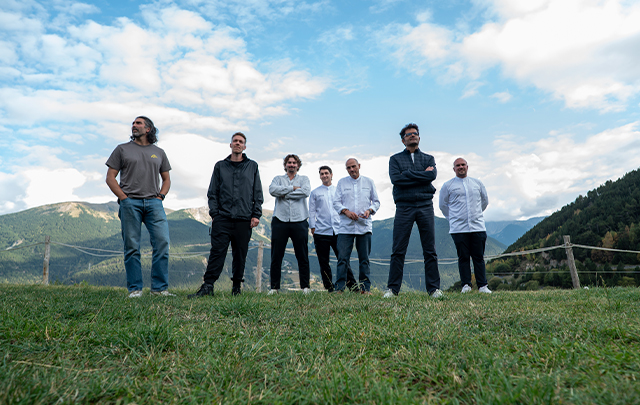
Andorra Taste demonstrates that high-mountain cuisine can turn its limitations into a form of excellence
News
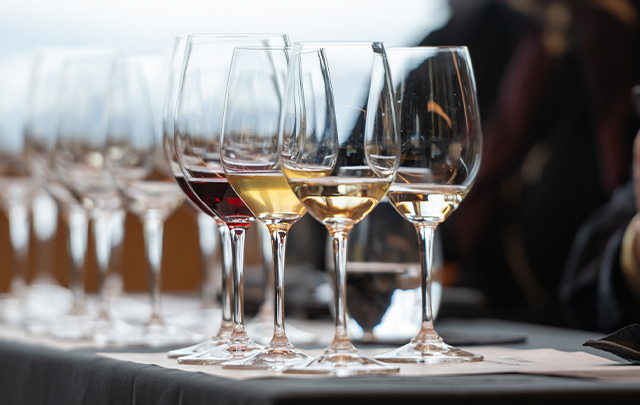
Exploring high-altitude wines: a presentation by Audrey Doré
News
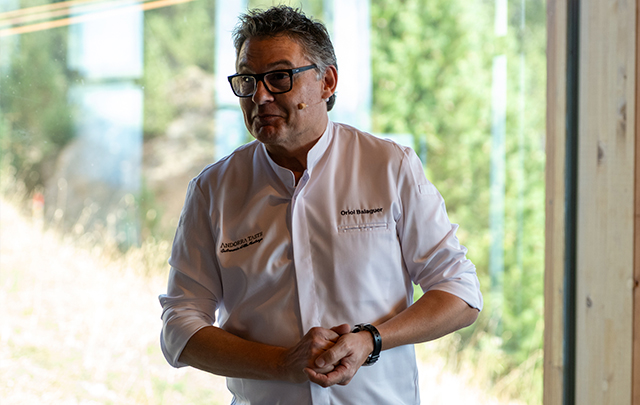
Innovation and trends in pastry: Oriol Balaguer's perspective
News
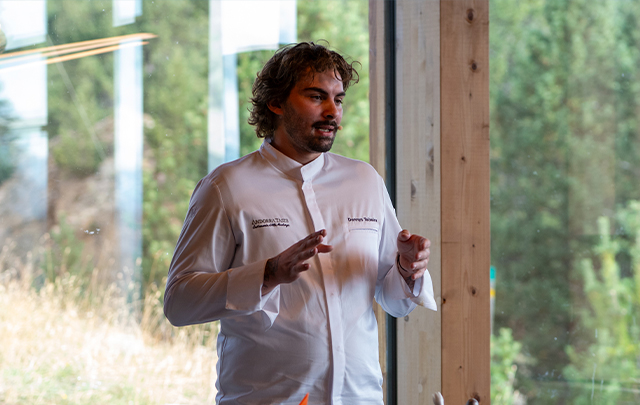
Gastronomy as narrative: innovation and collaboration in local cuisine
News
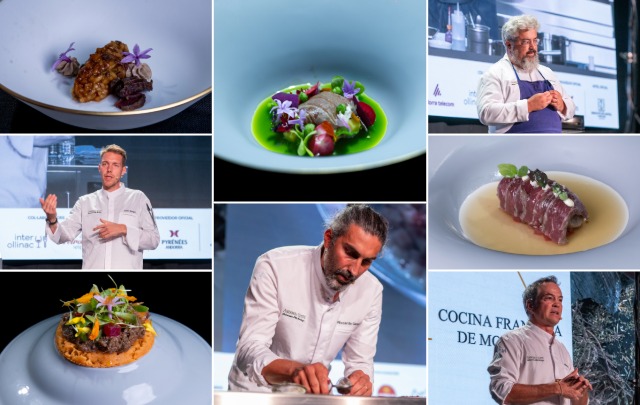
Mountain chefs need producers who are willing to challenge tradition
News
Traditional cuisine as a reflection of identity
News
Riccardo Gaspari's regenerative cuisine: a sustainable cycle from farm to table
News
Iván Cerdeño: hunting as a living memory of Toledo through the lens of haute cuisine
News