News
Exploring high-altitude wines: a presentation by Audrey Doré
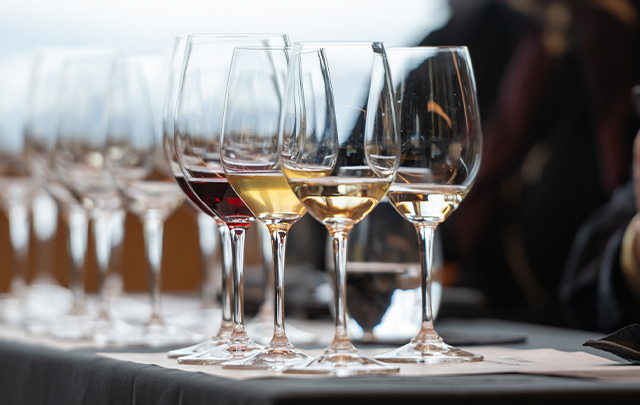
Audrey Doré's presentation explored the fascinating world of high-altitude wines, focusing on the region of Andorra. Doré noted that, although the definition of “high altitude” is not strictly defined in the EU, it generally refers to vineyards located at elevations above 500 meters. Although Andorran vineyards at 1,000 meters may seem low in elevation compared to other places, their significance is notable.
The talk included a tasting of six wines, beginning with a Catalan Riesling, known for its acidity. The effects of climate change on wine production were discussed, particularly in the Pallars Jussà region, as well as how altitude influences wine characteristics, resulting in fresher and more acidic profiles.
Doré also explored innovations in winemaking at high altitudes, mentioning regions such as Vaifoska and Languedoc, where new winemakers are revitalizing local grape varieties. The presentation underscored the importance of protected designations for these varieties and the revitalization of abandoned vineyards in the Ball Norte region, near Madrid.
Finally, the discussion turned to how wines have evolved in the wake of wildfires, highlighting a 2015 “fire wine” and the possibility that future generations might explore even higher altitudes for wine production. The session concluded by emphasizing the unique characteristics of high-altitude wines and the adaptations needed to address climate challenges.
Related news
News
Andorra Taste breaks records with more than 70,000 drinks sold
News
Andorra Taste demonstrates that high-mountain cuisine can turn its limitations into a form of excellence
News
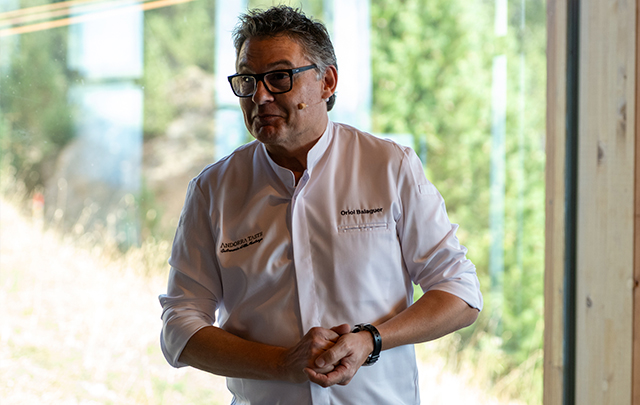
Innovation and trends in pastry: Oriol Balaguer's perspective
News
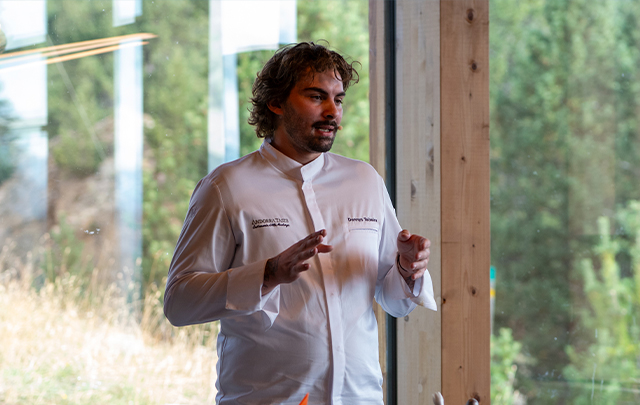
Gastronomy as narrative: innovation and collaboration in local cuisine
News
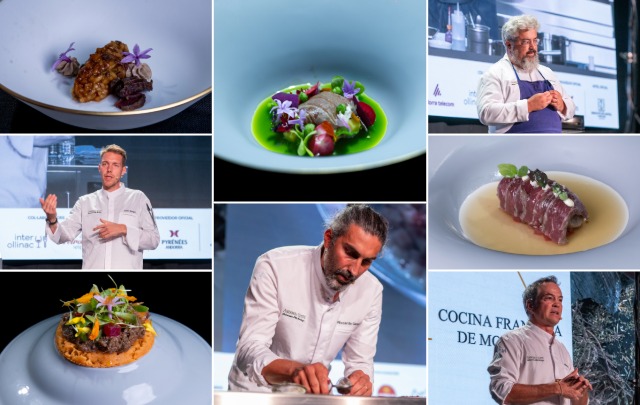
Mountain chefs need producers who are willing to challenge tradition
News
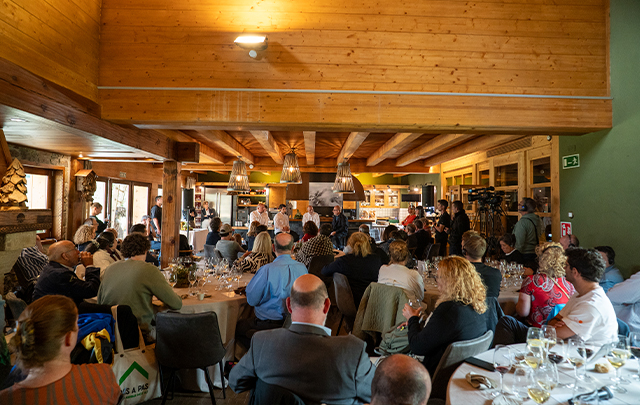
Traditional cuisine as a reflection of identity
News
Riccardo Gaspari's regenerative cuisine: a sustainable cycle from farm to table
News
Iván Cerdeño: hunting as a living memory of Toledo through the lens of haute cuisine
News
High-Mountain cuisine: Javier Torres and Andorra's culinary tradition
News